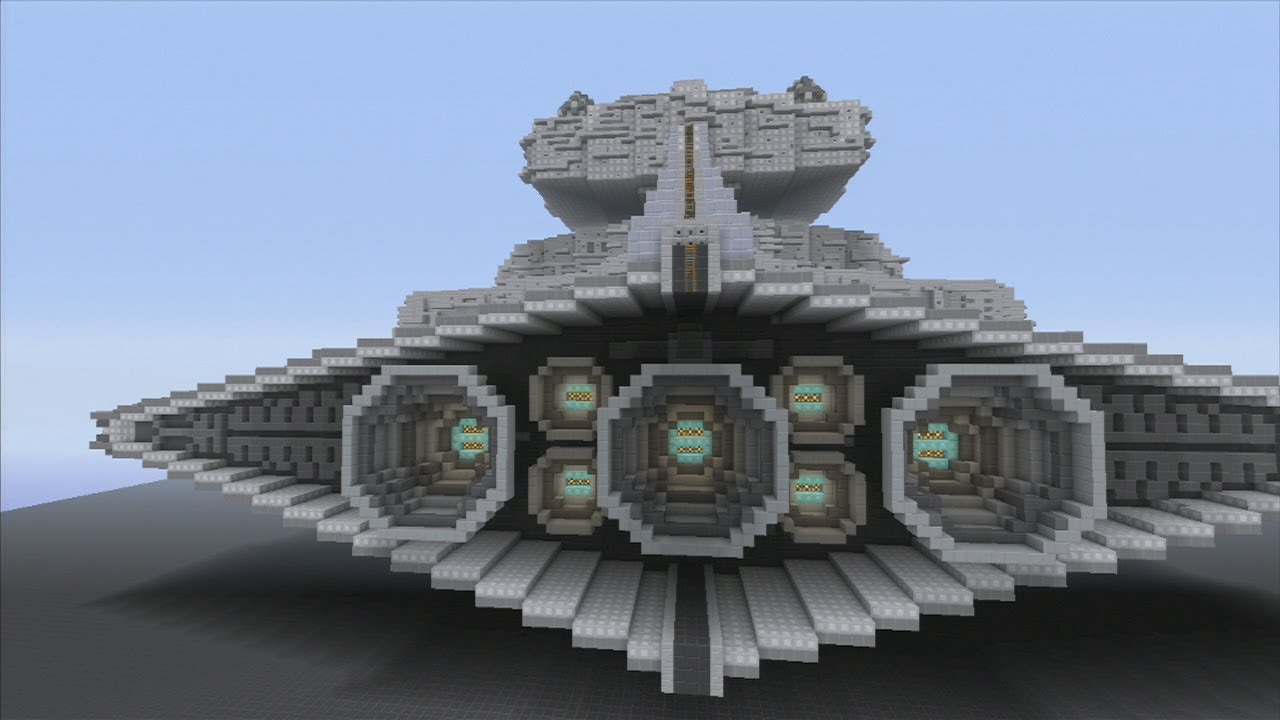
Minecraft Star Wars Venator Map Of California
Contents Characteristics Hangar spaceSeveral starfighters taking off from a Venator's main hangar passageDuring the early period of the, the Venator-class featured a wide array of space. The forward section of the Star Destroyer featured a passage down the middle, with bays for on either side. It was mainly accessed by large doors on top of the ship.
View AgarTron's MC profile on Planet Minecraft and explore their Minecraft fansite community activity. California craftsman 1 'magnolia' 7 Diamonds 264 views 0 downloads 2 comments 0 favorited. VENATOR Star Destroyer Star Wars (full scale) 428 Diamonds 93,747 views 5,835 downloads 312 comments 241 favorited.
At the fore of this passage, at the bow the ship, was a collection of. Towards the aft of the passage, doors in the floor could open, leading to a space where could dock. If no cruiser was docked, however, the space could be used by personnel to jump out of the Star Destroyer directly onto the battlefield, or to deploy without the need for. Overseeing the passage was a raised command station positioned at the aft. Even further aft, the Venator-class had two independent docking bays on their port and starboard sides, again protected. A newer style of Venator; only a small section of the red strip could open upTowards the end of the war, a different type of Venator was used.
These featured a set of smaller doors on the dorsal side of the ship, and lacked access from the ventral side altogether, with the blast doors that previously lead to the main hangar space replaced with additional lighting, a crane and sometimes additional weaponry, such as a built-in beam weapon. Additionally, the side doors no longer led to independent hangars, but another passage that linked the two sides of the ship. The central hangar row then joined the smaller passage in the middle, replacing where the command station used to be. At the front of the main passage was a small hole starfighters could launch from without having to go through any of the main doors. BridgesThe bridge of a VenatorVenator-class Star Destroyers featured two, with the starboard one serving as the primary command center of the ship. These bridges were raised from the main body of the destroyer and provided a wide, panoramic view of the battle. However, the bridges' exposed nature made them vulnerable to attack.
The bridges featured large windows at the front, with two sunken pits behind, with a raised command walkway in between. This design would become a staple in Imperial vessels, as it gave emphasis to the command hierarchy.
Further behind, a sat between two sets of blast doors. This could be used to communicate with other personnel and analyze ship or troop movements. EnginesVenators featured ten, with three distinct sizes. They were powerful enough to a. Several Venators taking off from dedicated landing strips Landing capabilitiesVenators usually required specialized landing strips to perform atmospheric landings, such as those on, with performing surface landings on the battlefield due to their legs. However, surface landings could occur, as exemplified during the.
ComplementThe Venator could also carry, and, as well as the modular components to deploy a planetary. History Clone WarsA Venator in.Early in the war, the created the, a that could disable the electronic and power systems of a Republic attack cr.
The Imperial I-class Star Destroyer Devastator chases the CR90 corvette Tantive IV over Tatooine.In draft scripts for the film that would become Star Wars, the term 'Stardestroyer' refers to two-man fighters flown by what would become the. The film's second draft features four Star Destroyers chasing a single Rebel ship, but the tremendous costs incurred by (ILM) when production began helped lead Lucas to use a single 'terrifyingly large' Star Destroyer instead of four. ILM built a 91-centimeter (36 in) shooting model that was about half the size of the model for the Tantive IV the Star Destroyer was chasing. Lucas asked ILM to build a larger Star Destroyer model to match the Tantive IV's scale, but ILM convinced him that the camera invented for the film made this unnecessary. Nevertheless, they added additional hull details to the Star Destroyer model. The 13-second opening shot was the first special effects piece ILM completed, and its success was an essential test for the Dykstraflex.ILM built a 259-centimeter (102 in) Star Destroyer, equipped with internal lighting to provide a better sense of scale, for The Empire Strikes Back (1980). During production, Lucas decided that every Star Wars film would open in space with a shot of a Star Destroyer.

The Empire Strikes Back also introduces the Executor class of 'Super Star Destroyer', also referred to as a 'Star Dreadnought' or 'Star Dreadnaught'. The shooting model for the Super Star Destroyer Executor in (1980) and (1983) was 282 centimeters (111 in) long.The design of the Venator-class Star Destroyers appearing in (2005) are meant to bridge the appearance of the Acclamator-class transports in (2002) and the Imperial class in the original trilogy.The Imperial I-class Star Destroyers are white, as shown in A New Hope, Rogue One, and Solo. The Imperial II-class Star Destroyers in The Empire Strikes Back and Return of the Jedi are grey.has pointed out that the Star Destroyer's triangular shape is useless in space physics, and would only be useful in a planetary atmosphere as seen in Rogue One. Despite being freed from the 2D battle constraints of a planetary battle, has noted that Star Wars does not go by a true 3D environment in space battles.
Depiction Films and television Star Destroyers of varying factions have appeared in every Star Wars film and television production except Star Wars: Episode I - The Phantom Menace.The iconic Imperial Star Destroyer first appears in the opening scene of Star Wars, where the Imperial I ( Imperator)-class Star Destroyer Devastator of, chases the CR90 Corvette carrying above. This appearance shows the Imperial Star Destroyer's massive size in comparison to the Corvette. Star Destroyers of the Imperial II subclass (nicknamed the Impstar-Deuce in Legends) are seen in The Empire Strikes Back and Return of the Jedi including the opening sequences of both films; the Imperial II has numerous changes (cosmetic and functional) compared to the Imperial I. According to both canon and Star Wars Legends (see below), Imperial I Star Destroyers including Devastator still remain in service as of the events of The Empire Strikes Back but have been refitted so they appear cosmetically identical to the Imperial II. The Empire Strikes Back introduces a massive Super Star Destroyer, the Executor-class Star Dreadnought Executor, of 'Death Squadron' under the command of Admiral, Darth Vader's personal Imperial armada. The Executor dwarfs the Devastator and five smaller Imperial-class Star Destroyers escorting it.
In Return of the Jedi, swelled to 33 Imperial-class star destroyers, 2 battle cruisers, and 3 Tector-class star destroyers; the Emperor assumes control of Death Squadron, which executes the ambush against the Rebel Fleet, with the Executor as his Imperial flagship.Other Star Destroyer varieties appear in the Star Wars prequel films. The final moments of depicts being loaded into large Acclamator-class transgalactic assault ships that are highly similar in appearance to Star Destroyers, perhaps signifying that the Acclamator as a precursor. Venator-class Star Destroyers are introduced in Revenge of the Sith and later appear throughout (2008–2014, 2019). Venator-class ships initially appear with a red and gray Republic color scheme. However, toward the end of Revenge of the Sith the Venators are dull gray, signifying the Empire's rise to power. ( Star Wars creator calls the cigar-shaped visible at the beginning of Revenge of the Sith 'Star Destroyers' in the movie's DVD commentary track, although this is likely a misnomer.
Separatist cruisers and frigates, with their organic shapes and bulges that contrast sharply with the angular lines of Star Destroyers, are the forerunners of the Mon Calamari Star Cruisers and Nebulon-B Escort Frigates used by the Rebel Alliance in the films Rogue One, The Empire Strikes Back and Return of the Jedi.)In the first installment of the sequel trilogy, (2015), set over 30 years after the fall of the Empire, the wrecks of the Empire's Star Destroyers appear on the surface of the desert planet Jakku. Scavenges material from the crashed Imperial II-class Star Destroyer Inflictor, and pilots the through the wreckage of the Executor-class Star Dreadnought Ravager. The Force Awakens and its sequel, (2017), also introduce new Star Destroyers making up the forces of the, such as Resurgent-class Star Destroyer Finalizer, the Mandator IV-class Siege Dreadnought Fulminatrix, and 's flagship, the Mega-class Star Dreadnought Supremacy. The final entry in the sequel trilogy, introduces a fleet of 'Death Star Destroyers' (which appear similar to the Imperial-class and not the First Order's designs) which are under the command of. Novels and other media Star Destroyers appear in novels, games, and other media set during various periods in the Star Wars universe. Novels state the Empire had a dozen Super Star Destroyers in service during the time of the Battle of Endor in addition to Darth Vader's Executor.
The final surviving Super Star Destroyer, the Executor-class ship Ravager, is the vessel whose wreckage appears in The Force Awakens. The Ravager's crash onto Jakku is depicted in the game (2015).The Victory-class Star Destroyer first described in the early Star Wars novella, was initially designed as a direct predecessor to the Imperial-class during the development of A New Hope, which would make it a follow-up to the Venator-class seen in Revenge of the Sith. The Victory appears very similar in appearance to the Imperial-class which succeeded it; albeit the Victory being considerably smaller in scale (900 meters in length versus 1600 meters), adds atmospheric maneuvering 'wings' on the port and starboard sides (according to sourcebooks, the Victory I-class can enter a planetary atmosphere which is a unique attribute not found in the Victory II and Imperial-class Star Destroyers), and a shorter conning tower with different elements on the command bridge. The Victory-class was developed from a prototype Star Destroyer model created by for, with the final design being used for the basis of the Imperial-class.
Ending up the Victory-class Star Destroyer did not make it to the films and for a long time featured only in (see below). It first appeared in the new Star Wars canon in the 2014 novel Tarkin, written by James Luceno, and was first depicted in Darth Vader 6: Vader, Part VI, a 2015 comic book written by Kieron Gillen and illustrated by Salvador Larroca. The Victory Star Destroyer is the Imperial Navy's starting vessel in the core set of 's Star Wars: Armada, a table top miniatures game released on March 27, 2015. Star Wars Legends In April 2014, most of the licensed Star Wars novels, games, and comics produced since 1976 (and prior to 2014), were rebranded by as; and therefore declared non-canon to the franchise.Star Destroyers feature in numerous Legends publications, with a considerable amount of additional notable information. According to ' sourcebooks and other texts, Imperial-class Star Destroyers are constructed by Kuat Drive Yards and hold a distinguished place in the, symbolizing the Empire's military might with a peak number of more than 25,000 vessels.
Like the Venator and Victory-class ships that precede it, the Imperial-class is a combining the roles of a,. Notable for its massive size and overwhelming firepower compared to its fore-bearers; a single Imperial-class ship is capable of singlehandedly taking on a fleet of enemy vessels or 'reducing the surface of a planet to a slag' (known as 'Base Delta Zero'), and its mere presence is often enough to deter rebellion. At 1,600 meters (5,200 ft) long, Imperial-class Star Destroyers are crewed by 9,235 Officers, 27,850 enlisted personnel, and 275 Gunners. The Imperial I is armed with 60 turbolasers, 60 ion cannons, and 10 tractor beam projectors for space combat. The standard complement is 72 (including 12 TIE Bombers and 12-24 TIE Interceptors), and a variety of support craft including shuttles and transports. Retrieved 2011-12-22., p.
121-22. ^, p. 247-48.
Fry, Jason; Paul R. Urquhart (2012-04-01). Star Wars: The Essential Guide to Warfare.

Star Wars Venator Model
Titan Publishing Company. P. 117. ^. Retrieved 2008-11-05. Archived from on 2008-12-05.

Retrieved 2008-11-05. Random House.
P. 354. Horne, Michael Allen (1993). Star Wars: Han Solo and the Corporate Sector Authority.
Pp. 91–92. McMilian, Graeme (April 25, 2014). Retrieved May 26, 2016. April 25, 2014.
Retrieved May 26, 2016. ^ Gorden, Greg (1993). Star Wars Imperial Sourcebook (2nd ed.). Horne, Michael Allen (June 1993). Dark Empire Sourcebook.
Wiker, J.D.; Steve Miller. The New Jedi Order Sourcebook. Retrieved December 28, 2016. Star Wars Databank. Archived from on 2007-12-12. Retrieved 2007-12-15.
^ (1996). Bantam Spectra. Retrieved 2018-04-18. Retrieved 2018-04-18. Retrieved 2007-07-12.
Archived from on 18 June 2013. Retrieved 2007-07-15.Sources.